Old window tint has a way of announcing itself. The purple haze on a rear window that used to be a deep charcoal. The bubbles that trap light at the bottom of a door glass. The peeling corner that catches your fingernail every time you roll the window down. If your film has reached that stage in Sacramento’s heat, you’re not imagining it — and you’re not stuck with it. Professional window tint removal in Sacramento is routine when it’s done right.
This guide walks through what drives the cost of professional window tint removal in Sacramento, how the process actually works, how long it takes, and when removal is worth doing versus living with — so you don’t trade a cosmetic problem for a cracked defroster grid or scratched glass.
We’ve removed window tint from vehicles across Sacramento for more than a decade at our Arden-Arcade shop — everything from a single bubbled rear window to full six-window strip-and-retint jobs. Here’s the honest version.
Why Window Tint Fails in Sacramento (Faster Than Most Places)
Tint doesn’t fail on a calendar. It fails on heat and UV exposure, and Sacramento delivers both in volume. Long, dry summers with stretches well over 100°F bake the film’s adhesive and break down the dye in cheaper tints.
Three failures show up again and again:
Purpling. Non-ceramic dyed films lose color stability under years of UV. The dark neutral fades to a distinct purple or bronze. It’s purely cosmetic — the film still blocks some light — but it looks worn and dates the car instantly.
Bubbling. When the adhesive layer degrades, it stops bonding evenly to the glass. Pockets of air and failed glue form bubbles you can’t squeegee out, because the problem is the glue, not trapped water. Once bubbling starts, it spreads.
Peeling and delamination. Two-ply films can separate, or edges can lift where the film meets the glass. This is common on rear windows that see the most direct sun.
If any of this sounds like your car, the film has done its job and reached the end of its life. The good news: removal is routine, and it’s the clean slate for a modern film that won’t do this again.
Signs It’s Time to Remove Your Window Tint
- Purple or bronze tint
- Bubbling
- Peeling edges
- Sticky adhesive residue
- Reduced visibility at night
If you’re seeing one or more of these, your film has failed and it’s worth removing.
What Determines Your Window Tint Removal Cost
There’s no honest flat rate for tint removal, because the work isn’t the same on every car. Anyone quoting a single number sight-unseen is guessing. Here’s what actually moves the price:
- Number of windows — one bubbled rear window is a very different job than a full six-window vehicle.
- Film type and age — older, heat-baked adhesive is more stubborn; two-ply films that delaminate leave a separate layer of glue behind that has to be worked off.
- Rear defroster lines — rear glass with a defroster grid takes more care and time (more on why below).
- Factory vs. aftermarket film — some vehicles have factory “privacy glass” that’s dyed *into* the glass and can’t be removed; that’s different from aftermarket film sitting on top.
The fastest way to a real number is to let us see the car. Get a free quote and we’ll tell you exactly what’s on your vehicle, what removal involves, and a firm price before any work begins — no surprises at pickup.
Removing to re-tint? If you’re stripping old film to install fresh tint, doing both in one visit is almost always more economical than treating them as two separate jobs — and you drive away finished. Ask about it when you request your quote.
How Long Does Tint Removal Take?
Timing depends on the same factors as cost, but here’s a realistic guide:
- A single window: roughly 30–45 minutes, depending on film age and whether it’s over a defroster.
- A full vehicle (six windows) with aged film and rear defroster: often a half-day of careful work.
- Removal plus a fresh install: planned as one appointment — ask for the combined timeline when you book.
The variable that stretches timing most is baked-on adhesive. Film that’s spent years in Sacramento sun releases in stubborn pieces and leaves more glue residue, and clearing that residue properly is what protects your next install.
How Professional Tint Removal Actually Works
Done properly, tint removal is patient work, not brute force. The goal is to lift both the film and every trace of adhesive without touching the glass, the defroster lines, or the window seals. Our process:
- Assess the film and glass. We identify the film type and its VLT (visible light transmission), check the defroster grid, and mask the door panels, seals, and interior before anything else.
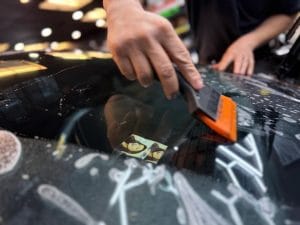
- Apply controlled steam and solvent. A commercial steamer softens the adhesive so the film releases in large sheets instead of shredding. We use an ammonia-free adhesive remover — ammonia can fog interior plastics and irritate on contact — to keep the glue workable rather than letting it dry and re-grip.
- Peel with the grain of the defroster. On rear glass, technique is everything: film is lifted in the direction that follows the defroster lines rather than dragging across them. This is exactly where a razor blade and a YouTube video go wrong — blade scratching and cross-pulling are what sever those lines.
- Clear the adhesive residue. This is the step DIY jobs almost always miss. After the film is off, a hazy layer of glue remains. We work it off completely so the glass is optically clear — essential if new film is going on, since fresh tint won’t bond over old adhesive.
- Final clean and inspection. The glass is cleaned inside and out and inspected in good light for any missed residue or scratches before the car goes back to you.
A single window can be quick. A full vehicle with aged film and defrosters is a half-day of careful work. The difference between a good removal and a bad one lives entirely in steps 3 and 4.
Ready to skip the risk? Get a free quote and we’ll handle it start to finish.
The Rear Defroster Question (Read This Before You DIY)
The thin lines baked onto your rear window are the defroster grid, and they sit on the inside surface of the glass — exactly where the tint adhesive is. A professional removal won’t damage them. But scraping dried film with a razor blade, or peeling aggressively across the lines, can lift or sever them. Once a defroster line is broken, that section stops clearing, and repairing the grid is fiddly and often imperfect.
Take a real example: removing baked-on film from the rear glass of a Tesla Model 3 demands specific technique, because the defroster lines are fine and the factory glass is unforgiving of a dragged blade. We steam that panel and lift the film along the grid, never across it — and we protect the powered door panels and electronics from water intrusion while steaming, so moisture never reaches a connector.
DIY removal also tends to leave glass hazed with adhesive that’s nearly impossible to fully clear without the right solvent and time. That haze isn’t just ugly — it will stop any new film from bonding.
None of this means removal is dangerous in the right hands. It means the risk lives in how it’s done. With proper steam, an ammonia-free remover, and defroster-safe technique, your glass and grid come through untouched.
DIY vs. a Typical Shop vs. World Auto Tint
Not all removal is equal. Here’s an honest comparison of what each approach actually delivers — verifiable differences only, not marketing claims:
| DIY Removal | Typical Tint Shop | World Auto Tint | |
| Defroster-safe technique | Risk of scratching/severing lines | Usually | Yes — lifted along the grid |
| Steam-based process | Rarely (heat gun/blade) | Sometimes | Yes — commercial steamer |
| Ammonia-free adhesive removal | Uncertain | Varies | Yes |
| Full residue clearing for re-tint | Often skipped | Varies | Yes — optically clear finish |
| New 3M tint upgrade available | No | Varies | Yes — authorized 3M dealer |
| Lifetime warranty on new film | No | Rarely | Yes |
The pattern is simple: removal is where corners get cut, and every cut corner shows up later — a dead defroster section, or haze that ruins the next install.
When to Remove vs. When to Leave It
A quick way to decide:
Remove it if:
- The film is purpling, bubbling, or peeling — it’s failed and will only get worse.
- You’re upgrading to a modern ceramic film for real heat rejection.
- The old tint is too dark to be legal and you want to avoid a fix-it ticket.
- You’re preparing the car for sale and want clean, uniform glass.
You can wait if:
- The film is intact, legal, and only lightly aged.
- Only one window is affected and it doesn’t bother you day to day.
Not sure whether your current tint is even street-legal? Our guide to California window tint laws in Sacramento breaks down the legal VLT limits for each window so you know before you decide.
After Removal: The Upgrade Worth Making
Most people don’t remove tint to have bare windows — they remove it to fix what the old film couldn’t do. This is where the last decade of film technology matters.
Modern 3M ceramic window tint rejects a large share of the sun’s infrared heat without going dark, and it won’t purple, because its color stability doesn’t rely on the dyes that failed in your old film. For a Sacramento summer, that’s the difference between a cabin that bakes and one that stays livable. As an authorized 3M dealer, we install genuine 3M film and back the work with a lifetime warranty — so bubbling and fading stop being your problem.
If you want the full picture on choosing a modern film — percentages, legality, and heat performance — our guide to window tinting in Sacramento covers what to put back on after the old film comes off.
Why Sacramento Drivers Bring Removal Jobs to World Auto Tint
Removal is where cheap shops cut corners — they rush the adhesive step, nick a defroster line, or leave haze that ruins the next install. We treat it as precision work because everything downstream depends on it.
- 900+ five-star Google reviews from Sacramento drivers.
- Authorized 3M dealer with factory-trained, certified installers.
- Lifetime warranty on new film we install.
- 10+ years serving Sacramento from our Arden-Arcade shop.
We handle everything from a single bubbled window to a full strip-and-retint, and we’ll tell you honestly whether removal is even worth it for your car before you spend a dollar.
Frequently Asked Questions
How much does window tint removal cost in Sacramento?
It depends on the number of windows, the film’s age and type, and whether the glass has rear defroster lines. Rather than guess, we look at the car and give you a firm quote before any work begins. If you’re also installing new film, combining both is more economical than separate visits.
How long does tint removal take?
Roughly 30–45 minutes for a single window; a full vehicle with aged film and rear defrosters is often a half-day. Removal combined with a fresh install is planned as one appointment.
Will removing tint damage my rear defroster?
Not when it’s done correctly. The defroster lines sit on the inside of the rear glass where the adhesive is, so removal is done with controlled steam and defroster-safe technique to protect them. The real risk comes from DIY blade-scraping, which can lift or break the lines.
Can I remove window tint myself?
You can, but two things trip up most DIY jobs: breaking rear-defroster lines with a razor blade, and leaving a haze of adhesive that no new film will bond to. If the car is heading for fresh tint, professional removal pays for itself by giving you truly clear glass to start from.
Do I have to remove old tint before installing new tint?
Yes. New film needs clean, adhesive-free glass to bond properly. Installing over old film or leftover glue leads to bubbling and a short lifespan. Proper removal is the foundation of a good new install.
My factory windows look tinted — can that be removed?
Some vehicles have “privacy glass” that’s dyed into the glass itself, not aftermarket film on top. That can’t be removed. We can tell you which one your car has when we look at it.