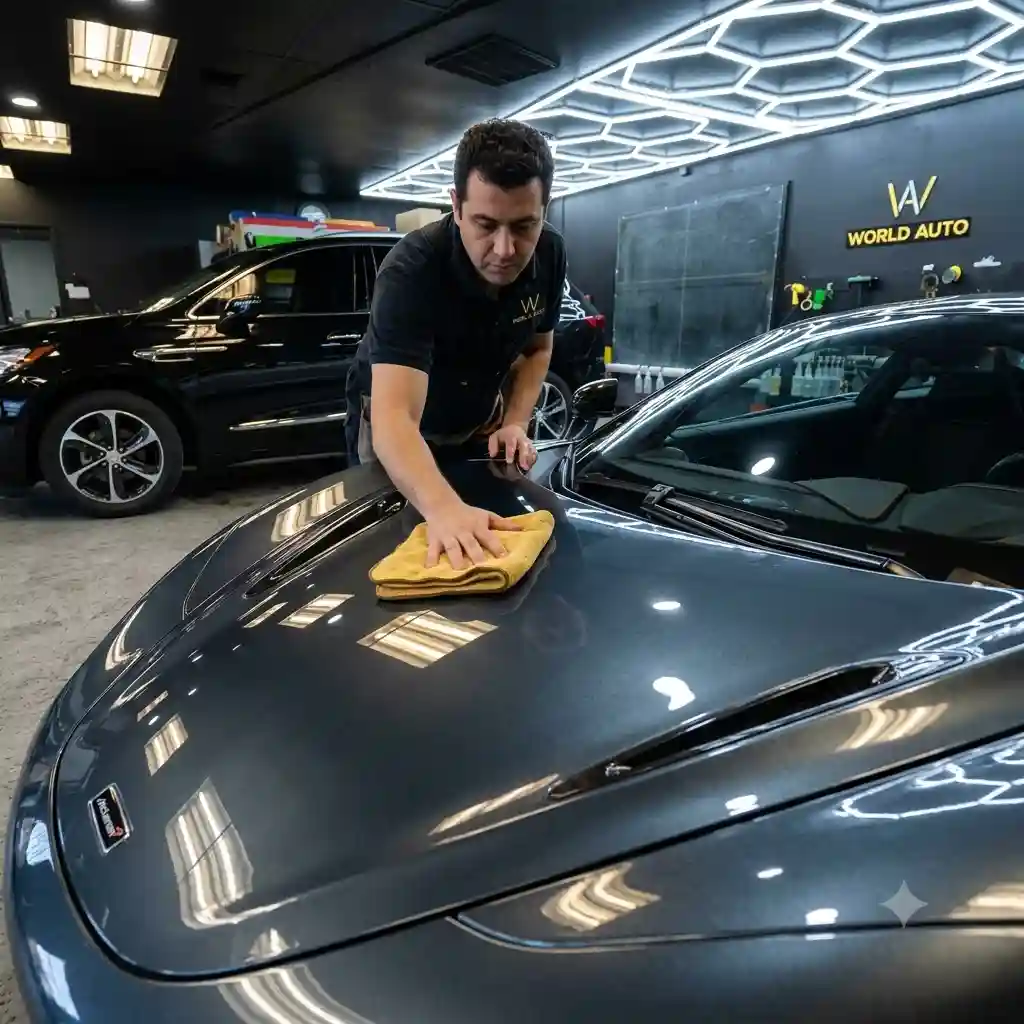
Sacramento gives you a narrow window every year, and most owners miss it. Somewhere between the last 100°F afternoon and the first real storm, there’s a stretch of mild, dry weeks that is the best time to protect car paint before winter — and it closes faster than people expect.
Miss it, and you spend the wet months watching summer’s damage get worse under road grime. Use it, and your car goes into the rainy season corrected, sealed, and far easier to keep clean.
When Should You Protect Car Paint Before Winter in Sacramento?
Autumn — after the extreme heat breaks and before the first sustained storms, roughly late September through early November. This timing lets correction and coating work happen in stable conditions, and puts protection in place for the entire wet season instead of halfway through it.
Waiting until spring is the common mistake. Protection works forwards, not backwards: sealing paint in October prevents five months of damage, while doing it in April just locks in whatever winter already did.
What Did Summer Actually Do to Your Paint?
Four to five months of Sacramento sun leaves four specific kinds of damage: UV oxidation dulling the horizontal panels, acidic etching from bugs and bird droppings, hard-water spotting baked onto hot metal, and embedded iron from brake dust. Most of it isn’t obvious until you look at the hood in direct sunlight.
- UV oxidation. Intense daily sun breaks down clear coat from the top down. It shows first as dullness on the hood, roof and trunk.
- Etched contaminants. Bug remains, bird droppings and tree sap are acidic. On paint sitting at 140°F+, they etch into the clear coat rather than just sticking to it.
- Hard water spots. Sacramento’s water is mineral-heavy. Sprinklers or a rushed rinse in direct sun leave deposits that bond to hot panels.
- Embedded iron. Brake dust from freeway commuting works tiny iron particles into the surface. If your hood feels gritty after a wash, that’s what you’re feeling.
Is Winter Really Harder on Paint Than Summer?
It’s harder in different ways. Summer damage is UV and heat-driven etching. Winter damage is physical and chemical — wet roads throw far more grit and stones, road film is chemically aggressive, and contaminants sit longer because nobody hand-washes a car in a downpour.
| Season | Main threat | What it damages |
|---|---|---|
| Summer (May–Oct) | UV, heat, hard water, dust | Clear coat oxidation, etching, water spots |
| Winter (Nov–Mar) | Road debris, road film, standing water | Rock chips, chemical staining, grime bonding |
Sacramento’s wet season typically runs November through March. Unprotected paint going into that comes out of March looking noticeably older than it did in October.
Ready before the first storm? Request a free inspection and we’ll assess what your paint picked up over summer — including if it needs less than you expected.
What Order Should the Work Be Done In?
Decontaminate, correct, film, then coat — in that order. Every protective layer is transparent and semi-permanent, so it locks in whatever sits beneath it. Coating before correcting means stripping the coating later to fix the paint underneath: the same job twice, at full price.
- Decontaminate. Wash, chemical iron removal to pull embedded brake dust, and a clay treatment. This is what makes paint feel glass-smooth again.
- Correct. Machine polishing removes swirls, light etching and water spotting. This decides whether you’re protecting a great finish or preserving a tired one.
- Film the impact zones. Paint protection film goes on front-facing panels, directly onto corrected paint.
- Coat the whole car. Ceramic coating goes last, over both film and bare paint, so every surface sheds water the same way.
Does Every Car Need All Four Steps?
No. A newer garaged car often needs only decontamination and protection. A daily driver that parks outside benefits most from the full sequence. A car with existing chips should prioritise film. An honest assessment matters more than a package.
| Your car | What it usually needs |
|---|---|
| Newer, garaged | Decontamination + coating; minimal correction |
| Daily driver, parked outside | Full sequence — biggest visible difference |
| Already has chips on hood or bumper | Film first, then coating |
| Selling in spring | Correction + coating so it presents well in March |
How Can You Check Your Own Paint Today?
Five minutes in daylight tells you most of it. Run the back of your hand across the washed hood — gritty means embedded contaminants. Spray a panel — if water sheets flat instead of beading, your protection is gone. Look at the hood at an angle in sun — swirls and dull patches mean correction would help.
- Touch test — gritty paint after a wash means decontamination is needed.
- Water test — sheeting instead of beading means no active protection.
- Sun test — fine circular swirls on the hood mean correction is worthwhile.
- Edge check — chips on the hood or bumper leading edge mean film should come first.
- Spot check — cloudy rings that won’t wash off are hard-water etching, not dirt.
Two or more of those, and autumn is the moment to deal with it.
What Does Protection Actually Buy You Over Winter?
Road film rinses off instead of bonding, so an occasional wash between storms actually works. Water beads and runs rather than sitting on panels. And the chips that would have accumulated over five months of wet freeway driving mostly don’t happen, because the film took them instead.
For how long that protection realistically holds in this climate, see our guide to how long ceramic coating lasts. If you’re weighing film against coating, PPF vs ceramic coating explains which problem each solves.
Will a Wax Do the Same Job for the Winter?
No. Wax offers real but short-lived protection — typically weeks rather than seasons — and it degrades quickly under repeated rain and road film. A ceramic coating bonds to the paint and holds its properties across the wet months, which suits a winter-long timeframe far better.
Can This Be Done After the Rain Has Started?
Yes — the work happens indoors, so it isn’t weather-dependent. Doing it earlier simply means more of the wet season spent protected. If you’ve already missed the ideal autumn window, it’s still better to do it in December than to wait for spring.
Why Sacramento Owners Do Their Autumn Prep With Us
Both correction and coating are unforgiving of shortcuts. Rushed prep shows up as early failure, and high spots left during application can’t be quietly buffed out later. We treat preparation as the majority of the job, because that’s what decides how long the result lasts.
- 900+ five-star Google reviews from Sacramento drivers.
- Factory-trained, certified installers.
- Correction, film and coating handled in the right order, under one roof.
- 10+ years on Arden Way, serving Sacramento.
See our full ceramic coating service and paint protection film pages for what each package includes.
Get Ahead of the Rainy Season
Tell us what you drive, where it parks, and what summer put it through — and we’ll recommend the right autumn prep, in the right order, before the first storm arrives.